

- June 23, 2026
- Becky Seefeldt
- 0
What Does a Program Manager do for a Card Program?
When organizations launch a card program, they tend to focus on the visible elements: the card design, the user experience, the spend categories. What often gets less attention is the operational layer that holds all of it together. That layer is program management, and it is more consequential than most organizations anticipate. While the specifics of a program manager can vary by card program, they play an important role in ensuring timely, accurate launch of card programs.
What Is a Program Manager?
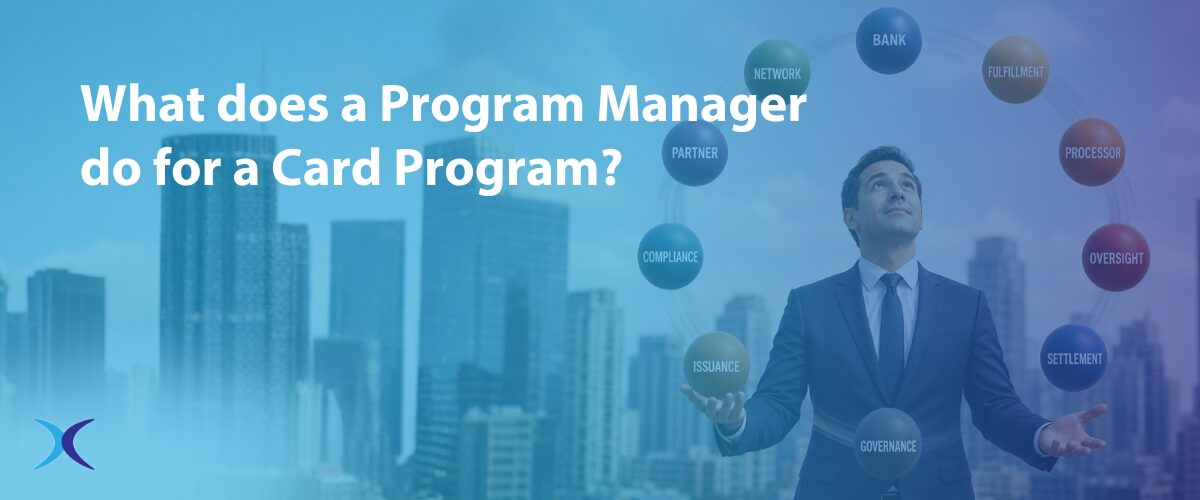
In the context of a card program, a Program Manager is the entity or individual responsible for the ongoing governance, compliance, and operational coordination of that program. The role sits between the issuing bank, the card network, the processor, fulfillment partners, and the end organization deploying the card.
A Program Manager does not simply administer a product. They are accountable for how the program is structured, how it performs against network and regulatory requirements, and how all the parties involved remain aligned over time.
What Does a Program Manager Do?
Program management spans several distinct domains. While the specific scope can vary by program structure, the core responsibilities consistently fall into the following areas.
Bank Relationship Management
Every card program operates under the oversight of an issuing bank. The Program Manager maintains that relationship on an ongoing basis, not just at launch. This means communicating program activity, responding to bank inquiries, supporting periodic reviews, and ensuring the program continues to meet the bank’s risk and compliance expectations. When program changes are needed, the Program Manager coordinates the approval process with the bank before anything goes live.
Network Compliance and Rule Management
Card networks publish rules that govern how programs are structured and operated. Those rules are updated regularly, and non-compliance carries real consequences. The Program Manager tracks card network rules, assesses their impact on the program, and coordinates any adjustments required to maintain good standing. This is an ongoing function, not a one-time setup task.
Program Configuration and Change Management
When a program needs to change, whether that means adding a spend category, modifying account structures, adjusting authorization rules, or onboarding a new product feature, the Program Manager owns that process. They understand how the underlying infrastructure is configured and coordinate across the processor, bank, and network to implement changes correctly and in the right sequence.
Card Fulfillment Coordination
For programs that issue physical cards, the Program Manager oversees the fulfillment process. This includes managing the relationship with the card manufacturer or fulfillment vendor, coordinating card ordering and inventory, and ensuring cards are produced and delivered in alignment with network specifications and program timelines.
Partner and Vendor Oversight
Card programs involve multiple parties: processors, issuing banks, networks, fulfillment vendors, and in some cases additional service providers. The Program Manager maintains visibility across these relationships, ensures contractual and operational obligations are being met, and serves as the primary escalation point when issues arise between parties.
Governance, Reporting, and Audit Readiness
Regulated programs require documentation. The Program Manager maintains the records, reports, and audit trails that banks and networks expect to see. This includes transaction reporting, program performance data, exception logs, and evidence of ongoing compliance activity. When a bank or network conducts a review, the Program Manager is the one who makes sure the program can demonstrate it has been operating as required.
Operational Issue Resolution
When something goes wrong, whether it is a processing exception, a fulfillment error, a compliance flag, or a partner dispute, the Program Manager is responsible for coordinating the response. They know who to contact, what the escalation path looks like, and how to document the resolution. This kind of institutional knowledge is difficult to build quickly and easy to underestimate until it is needed.
Who Can Be a Program Manager?
Program management can be handled in a few different ways depending on how the program is structured.
In some cases, the processor or infrastructure provider takes on this role. In others, a dedicated third-party program manager is engaged. Some organizations choose to manage the function internally, building out the relationships, compliance knowledge, and operational capacity themselves.
There is no single right answer. What matters is that the function is clearly owned and adequately resourced. A card program without active, accountable program management is a program with unmanaged risk.
Why a Fintech or SaaS Platform May Not Want to Be Its Own Program Manager?
The case for self-managed program management can seem straightforward: more control, fewer intermediaries, direct relationships with the bank and network. In practice, the tradeoffs are substantial.
First, the relationship burden is significant. Issuing banks and card networks have specific expectations around how program managers engage with them. Building those relationships from scratch takes time, and maintaining them requires ongoing attention. Organizations that underestimate this tend to find themselves reactive rather than proactive when issues arise.
Second, compliance requirements are continuous. Program management is not a setup task. It requires staying current with network rule updates, bank policy changes, regulatory shifts, and audit expectations. For a fintech whose core competency is its product, not payments governance, this can become a meaningful distraction.
Third, the cost of getting it wrong is asymmetric. A compliance gap or a missed network requirement does not just slow a program down. It can result in fines, program suspension, or loss of bank sponsorship. The stakes are high enough that organizations with limited payments operations experience are genuinely better served by working with someone who already has that infrastructure in place.
Finally, program management requires cross-functional coordination that most fintechs have not built. It is not just about knowing the rules. It is about having the systems, the contacts, and the institutional knowledge to execute when something unexpected happens.
Owning vs. Contracting Program Management
| Consideration | Being your Own Program Manager | Contracting with a Program Manager |
|---|---|---|
| Bank Relationship | Must be built from scratch; time-intensive to establish and maintain | Established relationships already in place; faster program onboarding |
| Network Compliance | Requires dedicated staff to track and implement rule changes | Monitored continuously; changes absorbed within existing processes |
| Operational Overhead | High; requires internal resources across compliance, ops, and vendor management | Reduced; day-to-day coordination handled externally |
| Time to Launch | Longer; bank and network approvals require established credibility | Faster; leverages existing approvals and partner infrastructure |
| Risk Exposure | Higher; compliance gaps and audit failures fall entirely on the organization | Shared; program manager carries accountability for governance functions |
| Institutional Knowledge | Built over time; vulnerable to staff turnover | Pre-existing; embedded in the program manager's systems and team |
| Strategic Focus | Diverted; payments governance competes with product development priorities | Preserved; internal teams stay focused on their core product |
The Strategic Value of Getting This Right
A well-managed card program runs more reliably, maintains better standing with its banking and network partners, and scales with less friction. Organizations that invest in capable program management, whether internal or external, tend to encounter fewer surprises and move faster when they need to make changes.
For fintechs focused on building great products, the practical question is not whether program management matters. It clearly does. The question is whether managing it internally is the best use of their resources, or whether partnering with someone who does it every day is the more efficient path.
